Introduction
Buying property is one of the most important financial decisions most people make in their lives. Whether it is your first home or an investment property, the excitement of owning real estate can sometimes make buyers overlook serious risks. Many buyers focus only on the price or appearance of a property and forget to analyze the hidden factors that can create long-term problems.
Real estate transactions involve complex legal, financial, and structural details. If a buyer fails to examine these carefully, the result can be unexpected expenses, legal disputes, or even financial loss. Unfortunately, many of these issues only become visible after the deal has been signed and the money has been paid.
The good news is that most property traps can be avoided with proper research, patience, and professional guidance. Understanding common mistakes helps buyers make smarter decisions and avoid costly regrets.
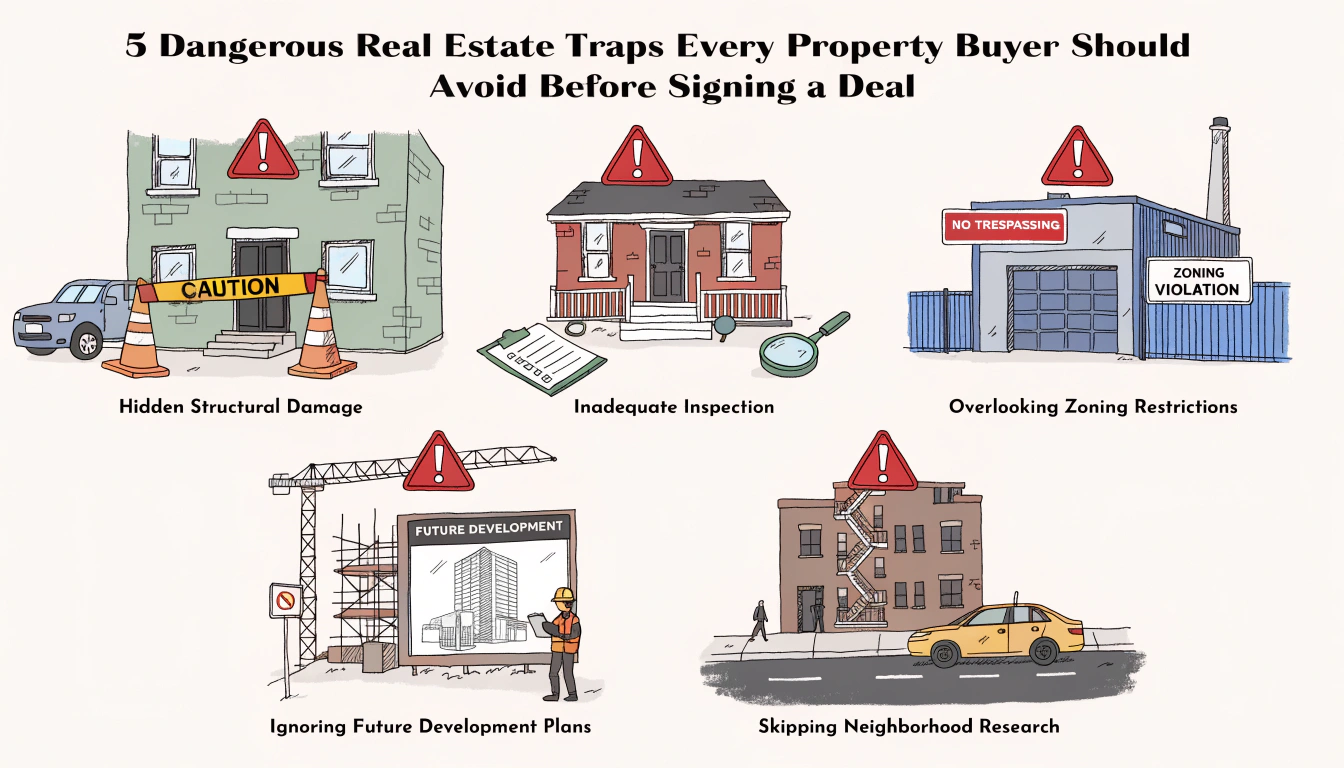
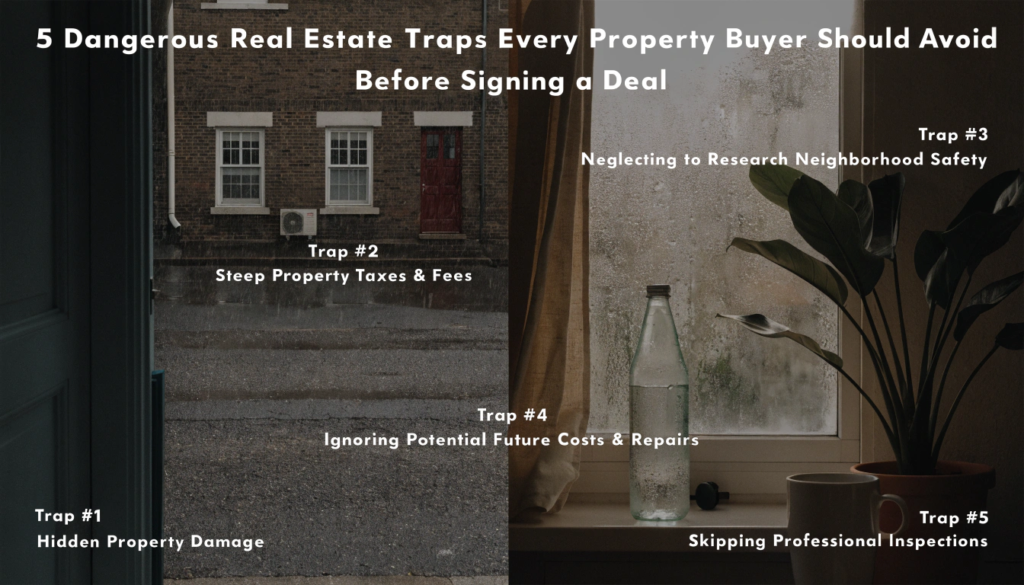
This guide explains some of the most dangerous real estate traps every property buyer should recognize before signing a deal. Learning about these risks can protect your investment and ensure that your property purchase becomes a long-term success rather than a financial burden.
Rushing Into a Property Purchase
One of the biggest mistakes buyers make is rushing into a deal. The fear of missing out often pushes people to sign contracts quickly without carefully evaluating the property. Real estate markets can move fast, but making a rushed decision can lead to serious problems later.
When buyers act too quickly, they may skip important steps such as inspections, market comparisons, or legal reviews. This can result in purchasing a property with hidden structural problems or an inflated price.
Taking time to evaluate different properties allows buyers to compare options and identify the best opportunity. A thoughtful approach helps ensure that the final decision is based on logic rather than emotion.
Patience is one of the most valuable tools in real estate. Waiting for the right opportunity can save thousands of dollars and prevent years of financial stress.
Ignoring Property Inspection Results
Many buyers underestimate the importance of a professional property inspection. Some people skip inspections to save time or money, but this decision can be extremely risky.
A detailed inspection reveals issues such as foundation cracks, electrical faults, plumbing leaks, roof damage, and pest infestations. These problems are often invisible during a casual property viewing.
Without an inspection report, buyers may discover expensive repairs only after moving in. In severe cases, structural damage can cost tens of thousands of dollars to fix.
Hiring a qualified inspector provides a clear understanding of the property’s condition. This knowledge allows buyers to negotiate repairs, request price reductions, or even walk away from a risky deal.
Overlooking Legal Ownership Issues
Property ownership disputes can create serious legal complications. Some buyers fail to verify whether the seller actually has the legal right to transfer ownership.
Issues such as incomplete documentation, unpaid taxes, or disputes among heirs can delay or cancel the transaction. In worst-case scenarios, buyers may lose access to the property entirely.
Before signing any agreement, it is essential to review the property title carefully. A real estate lawyer or legal expert can confirm that the ownership documents are authentic and free from disputes.
Verifying legal ownership protects buyers from fraud and ensures that the property transfer process is smooth and secure.
Underestimating Hidden Costs
Many buyers focus only on the purchase price and forget about additional expenses. However, property ownership involves numerous hidden costs that can significantly affect your budget.
These costs may include property taxes, insurance, maintenance, repairs, homeowners association fees, and utility upgrades. Renovations and unexpected repairs can also increase financial pressure.
Failing to plan for these expenses can make a seemingly affordable property difficult to manage financially.
Smart buyers always calculate the total cost of ownership before signing a deal. Understanding these expenses helps prevent unpleasant financial surprises later.
Falling for Unrealistic Investment Promises
Real estate advertisements often highlight high returns and rapid property appreciation. While some properties do generate strong profits, unrealistic promises should always be viewed with caution.
Developers or sellers may exaggerate rental income projections or future property values to attract buyers. Relying on these claims without independent research can lead to poor investment decisions.
Buyers should always verify market trends, rental demand, and neighborhood development plans before believing such promises.
Real estate success depends on accurate information, not marketing hype. Careful analysis helps buyers identify genuine investment opportunities.
Choosing the Wrong Location
Location is one of the most important factors in real estate value. A beautiful property in a poor location may struggle to attract buyers or tenants.
Some buyers focus too much on the property itself and ignore the surrounding neighborhood. Factors such as safety, schools, transportation, and nearby amenities greatly influence property demand.
A property located in a declining area may experience slow price growth or even lose value over time.
Researching the neighborhood carefully ensures that the location supports both lifestyle needs and long-term investment potential.
Ignoring Market Trends
Real estate markets constantly change due to economic conditions, interest rates, and population growth. Buyers who ignore these trends risk making poorly timed investments.
For example, purchasing property during a market peak can result in overpaying. On the other hand, buying in an emerging market may offer strong future growth.
Studying recent sales data and price trends helps buyers understand whether the market favors buyers or sellers.
This knowledge allows buyers to negotiate better deals and make smarter investment decisions.
Signing Contracts Without Reading Them
Real estate contracts often contain complex legal language that many buyers do not fully understand. Signing documents without reading them carefully can lead to serious consequences.
Important clauses related to payment schedules, penalties, repair responsibilities, and cancellation rights may be hidden in the fine print.
Buyers should always review contracts thoroughly before signing. Consulting a legal professional ensures that the terms are fair and clearly understood.
Taking the time to understand the contract protects buyers from unexpected obligations and legal disputes.
Overextending Your Financial Capacity
Buying a property that stretches your finances too far is a dangerous trap. Many buyers become emotionally attached to properties and agree to prices beyond their comfortable budget.
High mortgage payments combined with maintenance costs can create long-term financial stress.
Financial experts recommend leaving room in your budget for emergencies and future expenses.
A property purchase should strengthen your financial stability, not weaken it. Staying within your budget ensures a more secure investment.
Ignoring Future Development Plans
Future development projects can significantly influence property value. Infrastructure improvements such as highways, public transportation, and shopping centers can increase property demand.
However, negative developments like industrial projects or noisy highways may reduce property desirability.
Buyers who fail to research local development plans risk purchasing properties that lose value over time.
Checking municipal planning information helps buyers understand how the area may change in the future.
Trusting Verbal Promises
Verbal assurances from sellers or agents should never replace written agreements. Some buyers rely on promises about repairs, upgrades, or property features that are never documented.
Without written confirmation, these promises are difficult to enforce legally.
All agreements related to property condition, renovations, or financial arrangements should be included in the official contract.
Written documentation ensures accountability and prevents misunderstandings after the deal is completed.
Skipping Professional Advice
Real estate transactions involve legal, financial, and technical complexities. Buyers who attempt to manage everything alone may overlook critical details.
Professionals such as real estate agents, lawyers, and property inspectors provide valuable expertise that protects buyers from costly mistakes.
While professional services involve fees, they often save far more money in the long run by preventing serious problems.
Seeking expert guidance is a smart investment in the safety of your property purchase.
Focusing Only on Property Appearance
Beautiful interior design and fresh paint can easily impress buyers. However, appearance does not always reflect the true condition of a property.
Some sellers renovate visible areas while ignoring structural problems behind walls or beneath floors.
Buyers should always look beyond cosmetic features and evaluate the property’s overall condition.
A well-maintained structure is far more valuable than attractive decoration alone.
Ignoring Rental Potential
Even if buyers plan to live in the property themselves, considering rental potential is wise. Life circumstances may change, and the ability to rent out the property can provide financial flexibility.
Properties located near universities, business districts, or transportation hubs often attract strong rental demand.
Ignoring rental potential may limit future financial opportunities.
Evaluating rental demand ensures that the property remains valuable in multiple situations.
Overlooking Resale Value
A property purchase should also consider future resale opportunities. Buyers sometimes select homes based only on personal preferences without thinking about future buyers.
Features such as location, layout, and neighborhood reputation strongly influence resale value.
Properties with broad market appeal tend to sell faster and at better prices.
Considering resale potential protects your investment over the long term.
Not Comparing Multiple Properties
Some buyers purchase the first property they see because it feels convenient. However, comparing multiple options often reveals better opportunities.
Viewing different properties helps buyers understand market pricing and identify unique advantages or disadvantages.
This comparison process increases confidence in the final decision.
Exploring several options ensures that buyers choose the best property available within their budget.
Failing to Negotiate the Price
Negotiation is a normal part of real estate transactions, yet many buyers hesitate to negotiate. Sellers often expect price discussions, especially when inspections reveal problems.
A successful negotiation can reduce the purchase price or include repairs and upgrades.
Buyers who accept the initial price without discussion may miss valuable savings opportunities.
Understanding negotiation strategies helps buyers secure better deals.
Ignoring Long-Term Maintenance Needs
Every property requires maintenance over time. Roof replacement, plumbing upgrades, and exterior repairs are common long-term expenses.
Buyers who ignore these responsibilities may struggle with unexpected repair costs later.
Evaluating the age and condition of major systems helps estimate future maintenance expenses.
Proper planning ensures that the property remains safe, functional, and financially manageable.
Emotional Decision Making
Buying property is often an emotional experience. Buyers may fall in love with a house and ignore warning signs.
Emotional decisions can lead to overpaying or accepting unfavorable terms.
Successful buyers balance emotional preferences with practical analysis.
Maintaining objectivity helps ensure that the purchase is financially sound.
Not Preparing for Market Changes
Real estate markets are influenced by economic conditions, interest rates, and government policies. Buyers should prepare for possible market fluctuations.
Property values may increase or decrease over time, and mortgage rates can change significantly.
Understanding these risks helps buyers create flexible financial plans.
Prepared investors are better equipped to handle market changes without panic.
Conclusion
Buying real estate is a major financial commitment, and avoiding common traps is essential for protecting your investment. Many property buyers face costly problems simply because they rushed decisions or ignored important details during the purchasing process.
By carefully researching the market, reviewing legal documents, conducting inspections, and seeking professional guidance, buyers can significantly reduce risks. Patience and thorough analysis allow investors and homeowners to identify properties that truly match their goals and financial capabilities.
A well-planned property purchase not only provides a safe place to live or invest but also creates long-term financial security. Understanding these dangerous real estate traps ensures that your next property deal becomes a smart and rewarding decision.
FAQs
What is the biggest mistake property buyers make?
One of the biggest mistakes is rushing into a purchase without conducting proper research, inspections, and financial analysis.
Why is a property inspection important?
An inspection reveals hidden structural or mechanical problems that could require expensive repairs after purchase.
Should buyers always hire a real estate lawyer?
Hiring a lawyer helps review contracts, verify ownership documents, and ensure the transaction follows legal requirements.
How can buyers avoid overpaying for property?
Comparing similar property sales, studying market trends, and negotiating the price can help buyers avoid paying too much.
Is location really that important in real estate?
Yes, location strongly influences property value, rental demand, resale potential, and long-term appreciation.
Tags
real estate buying tips, property investment mistakes, home buying guide, real estate traps, property purchase advice, real estate investment risks, home buyer mistakes, property deal tips, real estate safety tips, property buying strategy
Leave a Reply