Tag: real estate wealth building

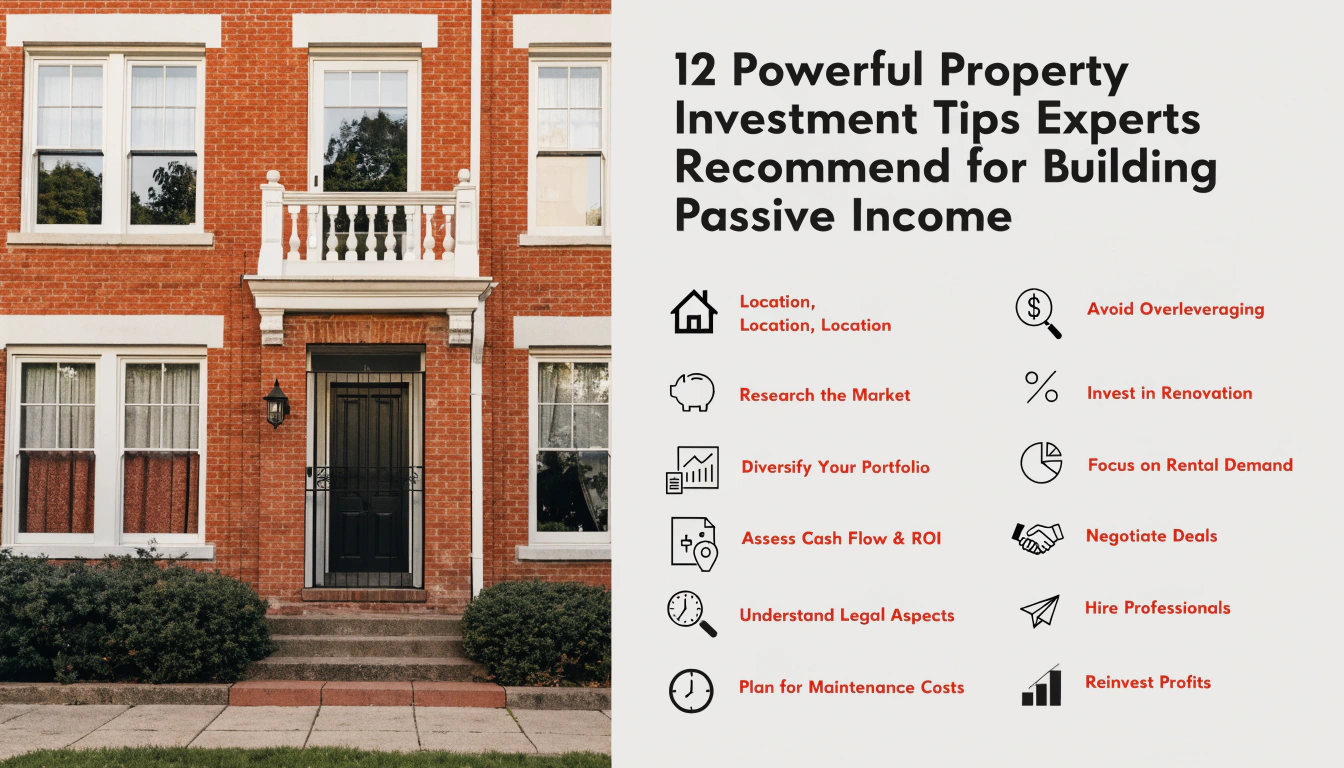
  • 12 Powerful Property Investment Tips Experts Recommend for Building Passive Income

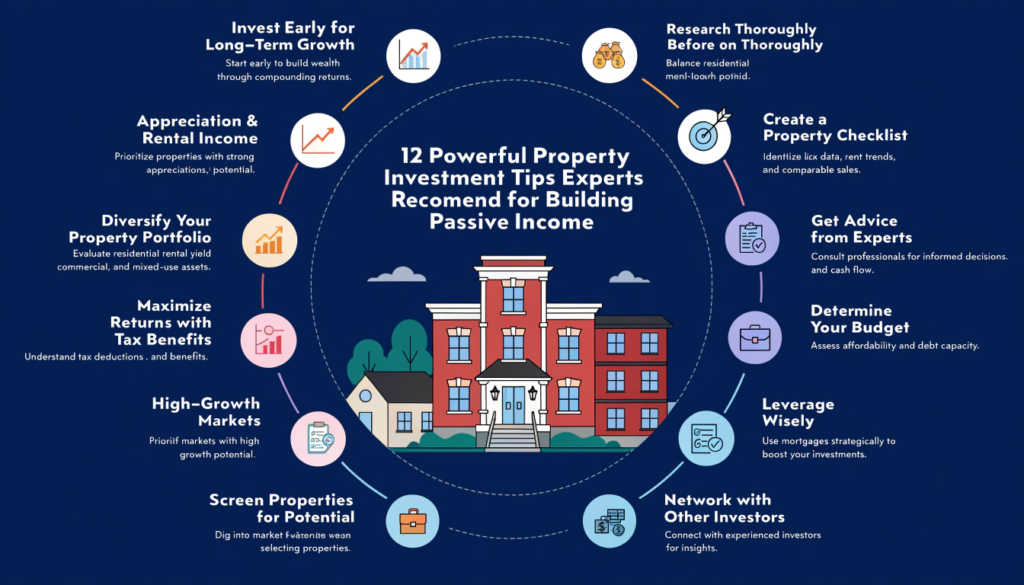
    12 Powerful Property Investment Tips Experts Recommend for Building Passive Income

    Introduction

    Property investment has long been considered one of the most reliable ways to build long-term wealth and create consistent passive income. Unlike many other investments, real estate provides both regular cash flow and the potential for property value appreciation over time. However, successful property investing is rarely about luck. It requires careful planning, strong market knowledge, and disciplined financial decisions.

    Many beginners enter the real estate market with high expectations but without the strategies that experienced investors use. This often leads to poor property choices, unexpected expenses, or low rental returns. On the other hand, investors who understand proven techniques can gradually build a strong portfolio that produces steady income for years.

    Experts agree that building passive income through property is possible for almost anyone who follows smart investment principles. From choosing the right location to managing tenants effectively, each decision plays a crucial role in the overall success of the investment.

    The following expert-recommended tips provide valuable guidance for anyone looking to grow wealth through property investment and establish a reliable stream of passive income.

    Understand the Concept of Passive Income in Real Estate

    Passive income from property means earning regular cash flow without being actively involved in daily work. Rental income is the most common example, where tenants pay monthly rent while the property continues to appreciate in value over time.

    However, true passive income requires proper systems and planning. Investors must ensure the property generates more income than expenses such as maintenance, taxes, and loan payments. When this balance is achieved, the property begins to produce consistent profits.

    Understanding this concept helps investors focus on properties that provide stable rental demand and long-term value growth. A clear strategy for passive income ensures that property investing becomes a reliable financial asset rather than a financial burden.

    Choose High Demand Locations

    Location is one of the most important factors that determine the success of a property investment. Properties located in areas with strong economic growth, good schools, transportation access, and nearby amenities usually attract more tenants.

    High demand locations reduce vacancy risks and allow investors to charge competitive rental rates. Areas near universities, hospitals, or business centers often experience consistent tenant demand.

    Investors who carefully research neighborhood trends can identify locations where property values are likely to increase in the future. Choosing the right location significantly improves the chances of generating steady passive income.

    Start with a Realistic Investment Budget

    A successful property investment begins with a well-planned financial strategy. Investors must calculate not only the purchase price but also additional expenses such as property taxes, repairs, insurance, and management fees.

    Many beginners underestimate these costs, which can create financial pressure later. Creating a realistic budget ensures that the investment remains financially sustainable even during unexpected situations.

    A well-structured budget also helps investors determine the type of property they can afford and prevents overextending their financial capacity.

    Analyze Rental Yield Carefully

    Rental yield is one of the most important indicators of a property’s income potential. It measures the annual rental income compared to the property purchase price.

    A property with strong rental yield provides consistent cash flow and helps cover expenses such as mortgage payments and maintenance. Investors should always calculate this value before purchasing a property.

    Understanding rental yield helps investors compare multiple properties and choose the one with the best financial performance.

    Focus on Long-Term Property Appreciation

    While rental income provides immediate cash flow, property appreciation increases long-term wealth. Over time, well-located properties often rise in value due to economic development and increasing demand.

    Investors who focus only on short-term income may miss opportunities for significant future gains. A balanced strategy considers both rental income and long-term property value growth.

    Selecting properties in growing areas with new infrastructure projects can significantly increase investment returns over time.

    Consider Multi-Family Properties

    Multi-family properties such as duplexes or apartment buildings can generate higher rental income compared to single-family homes. Multiple units provide several income streams within a single investment.

    Even if one unit becomes vacant, the remaining units can continue generating income. This reduces financial risk and provides more stable cash flow.

    For investors seeking to scale their portfolio faster, multi-family properties often provide better opportunities for passive income growth.
    Conduct Thorough Property Inspections

    Before purchasing any property, investors should conduct detailed inspections. Structural problems, plumbing issues, or electrical faults can create expensive repairs if discovered after purchase.

    Professional inspections reveal hidden issues that may not be visible during property viewings. This information helps investors negotiate repairs or adjust the purchase price.

    A well-inspected property reduces unexpected costs and ensures the investment remains profitable.

    Leverage Financing Wisely

    Many successful investors use financing to purchase properties instead of paying entirely in cash. Mortgages allow investors to control valuable assets while preserving their personal capital.

    However, borrowing must be done carefully. High interest rates or excessive debt can reduce profits and increase financial risk.

    Smart investors choose financing options that keep monthly payments manageable while still allowing the property to generate positive cash flow.

    Build a Reliable Tenant Screening Process

    Tenants play a major role in the success of rental property investments. Reliable tenants pay rent on time, maintain the property, and follow lease agreements.

    A thorough screening process helps identify responsible tenants. This process may include background checks, income verification, and previous rental history.

    Selecting good tenants reduces vacancy risks, minimizes property damage, and ensures consistent rental income.

    Hire Professional Property Management

    Managing rental properties requires time and effort. Responsibilities include tenant communication, maintenance coordination, and rent collection.

    Investors who prefer a hands-off approach often hire property management companies to handle these tasks. Although management services involve fees, they save time and reduce stress.

    Professional management can transform property investment into a truly passive income source.

    Diversify Your Property Portfolio

    Just like other investments, diversification reduces risk in real estate. Investors should avoid putting all their capital into a single property or location.

    Owning different property types or properties in multiple locations helps protect against market fluctuations.

    Diversification ensures that even if one investment underperforms, other properties can continue generating income.

    Monitor Market Trends Regularly

    Real estate markets change due to economic conditions, interest rates, and population growth. Successful investors continuously monitor these trends to identify new opportunities.

    Understanding market cycles helps investors buy properties at favorable prices and sell when values increase.

    Staying informed allows investors to adapt their strategies and maintain profitable investments.

    Improve Property Value Through Renovations

    Strategic renovations can significantly increase rental income and property value. Upgrades such as modern kitchens, improved flooring, or energy-efficient appliances make properties more attractive to tenants.

    However, renovations should be planned carefully to ensure costs do not exceed potential returns.

    Well-executed improvements can boost rental prices and attract long-term tenants.

    Plan for Unexpected Expenses

    Unexpected repairs, tenant turnover, or economic changes can affect rental income. Investors should always maintain a financial reserve to cover these situations.

    A common recommendation is to keep several months of property expenses in savings.

    This emergency fund ensures the investment remains stable even during challenging periods.

    Understand Local Property Laws

    Real estate investments are subject to local regulations and landlord-tenant laws. These rules determine lease agreements, eviction procedures, and property usage rights.

    Ignoring legal requirements can lead to fines or legal disputes.

    Understanding property laws ensures that investors manage their rental properties responsibly and legally.

    Use Tax Advantages

    Property investors often benefit from tax advantages such as depreciation deductions, mortgage interest deductions, and expense write-offs.

    These tax benefits can significantly increase overall investment returns.

    Consulting a tax professional helps investors understand how to maximize these financial advantages legally.

    Develop a Long-Term Investment Strategy

    Property investing is rarely a quick path to wealth. It requires patience, discipline, and long-term planning.

    Investors should set clear goals for income, portfolio growth, and retirement planning.

    A long-term strategy ensures that each property purchase supports a larger financial vision.

    Network with Real Estate Professionals

    Building relationships with real estate agents, contractors, and other investors can open doors to valuable opportunities.

    Networking often provides access to off-market deals, market insights, and professional support.

    Strong professional connections make the investment journey smoother and more successful.

    Be Patient and Avoid Emotional Decisions

    Real estate investing rewards patience and careful analysis. Emotional decisions often lead to overpaying or selecting poor investment properties.

    Taking time to evaluate opportunities allows investors to identify truly profitable deals.

    Patience helps ensure that every investment decision supports long-term financial success.

    Reinvest Profits to Expand Your Portfolio

    One of the most powerful ways to build passive income is by reinvesting rental profits into additional properties.

    Over time, a growing portfolio generates multiple income streams and increases financial security.

    Reinvestment allows investors to accelerate wealth creation and achieve financial independence faster.

    Conclusion

    Building passive income through property investment is a powerful strategy for long-term financial growth. While the process requires research, discipline, and patience, the rewards can be significant. Investors who carefully analyze locations, manage finances wisely, and maintain well-managed properties can generate consistent income while benefiting from property value appreciation.

    By following expert-recommended strategies such as choosing high-demand locations, analyzing rental yield, screening tenants carefully, and reinvesting profits, investors can gradually build a strong real estate portfolio. Over time, these investments can provide financial stability, wealth growth, and the freedom that passive income offers.

    Real estate remains one of the most dependable paths toward financial independence when approached with knowledge and careful planning.

    FAQs

    What is passive income in property investment?
    Passive income in real estate refers to earning regular rental income from property ownership with minimal daily involvement.

    Is property investment good for beginners?
    Yes, beginners can succeed in property investment if they research the market carefully and follow proven investment strategies.

    How much money is needed to start property investing?
    The required amount depends on property prices and financing options, but most investors need funds for a down payment and initial expenses.

    Can rental properties provide stable income?
    Yes, properties located in high-demand areas with reliable tenants can generate consistent monthly rental income.

    Should investors manage properties themselves?
    Some investors prefer self-management, while others hire property managers to handle tenant relations and maintenance.

    Tags

    property investment tips, real estate passive income, rental property strategies, property investing guide, passive income real estate, rental income ideas, real estate wealth building, property investment for beginners, landlord strategies, real estate portfolio growth

  • 6 Hidden Real Estate Investment Opportunities Most Property Investors Miss

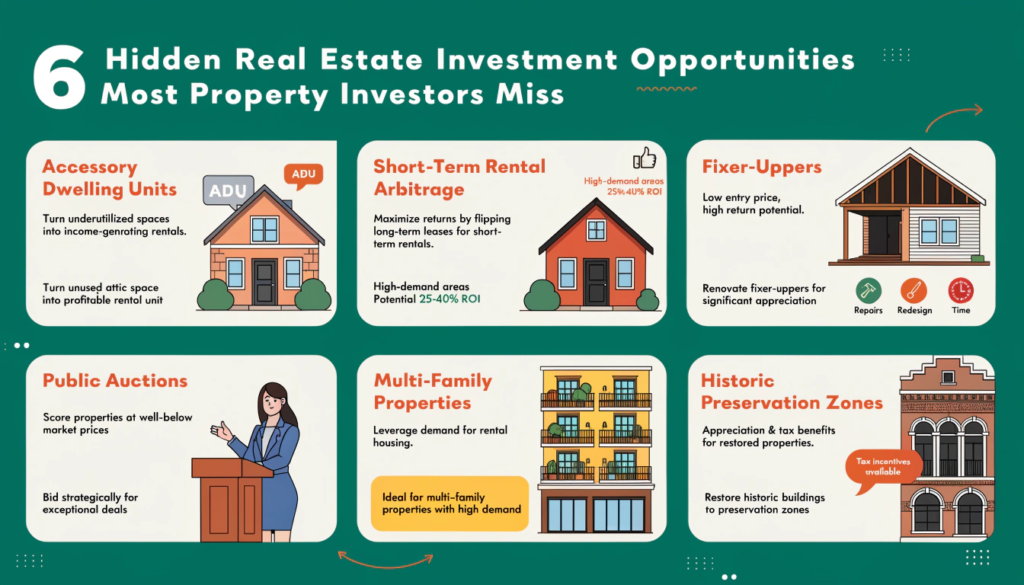
    6 Hidden Real Estate Investment Opportunities Most Property Investors Miss

    Introduction

    Real estate investing is often associated with buying rental homes, commercial buildings, or flipping properties for quick profit. While these traditional strategies can be profitable, many investors focus only on the most obvious opportunities and overlook several hidden areas of the real estate market. These overlooked opportunities can sometimes provide even better returns with less competition.

    Experienced investors know that the real estate market is full of unique possibilities. Some opportunities exist in emerging neighborhoods, underutilized properties, or creative investment strategies that most beginners never consider. By exploring these hidden paths, investors can find properties with strong growth potential before the majority of the market notices them.

    The key to successful investing is recognizing value where others fail to look. Investors who think creatively and conduct thorough research often discover opportunities that offer both strong rental income and long-term appreciation.

    Understanding these lesser-known real estate opportunities can help investors diversify their portfolios, reduce competition, and unlock new sources of wealth. The following insights reveal several hidden opportunities that many property investors often miss.

    Recognizing Hidden Opportunities in Real Estate Markets

    Many investors limit their property search to traditional residential homes or popular neighborhoods. However, hidden opportunities often exist in areas or property types that receive less attention. Recognizing these opportunities requires curiosity and a willingness to explore beyond the obvious choices.

    Investors who study local development plans, population trends, and economic changes can often identify areas with strong future potential. These locations may currently be undervalued but can grow significantly over time.

    Understanding how to spot these hidden opportunities allows investors to purchase properties before demand increases. This strategy can result in higher profits and stronger long-term investment returns.

    Investing in Emerging Neighborhoods

    Emerging neighborhoods often offer some of the best hidden investment opportunities. These areas may currently have lower property prices but show signs of future growth due to new infrastructure, business developments, or population increases.

    Investors who identify these areas early can purchase properties at affordable prices before the market becomes competitive. Over time, property values may rise significantly as more people move into the neighborhood.

    Researching city planning projects, transportation expansions, and commercial developments can help investors identify neighborhoods that are likely to experience rapid growth.

    This strategy requires patience, but it can generate impressive returns for forward-thinking investors.

    Exploring Distressed Properties

    Distressed properties are homes or buildings that are being sold due to financial difficulties, foreclosure, or neglect. Many investors avoid these properties because they require repairs or renovations.

    However, experienced investors often see opportunity where others see problems. Purchasing distressed properties at lower prices allows investors to renovate them and increase their market value.

    After improvements, these properties can either be rented for consistent income or sold for profit.

    Distressed property investing requires careful inspection and budgeting, but it can offer significant financial rewards.

    Converting Properties for Multiple Uses

    Some properties have the potential to serve multiple purposes, but investors fail to recognize their flexibility. For example, a large residential home might be converted into multiple rental units.

    Similarly, unused commercial spaces can be transformed into coworking spaces, small offices, or short-term rental accommodations.

    Creative property conversion increases the income potential of a single investment.

    Investors who think creatively about property use can unlock additional revenue streams that many others overlook.

    Investing in Vacation Rental Properties

    Vacation rental properties have become increasingly popular due to the growth of online booking platforms. Properties located in tourist destinations can generate significant short-term rental income.

    Unlike traditional long-term rentals, vacation rentals often produce higher nightly rates. This can result in greater annual profits if the property maintains high occupancy levels.

    Investors must carefully research local tourism demand and regulations before entering this market.

    When managed properly, vacation rentals can become highly profitable investment opportunities.

    Purchasing Properties with Development Potential

    Some properties may appear ordinary but offer significant development potential. For example, a small building located on a large piece of land may allow for future expansion.

    Investors who purchase these properties can later develop additional units, increasing both rental income and property value.

    Understanding zoning regulations and local development plans helps investors identify properties suitable for expansion.

    This strategy can transform a modest investment into a highly valuable real estate asset.

    Exploring Commercial Real Estate Niches

    Commercial real estate offers many niche opportunities that investors often overlook. Small retail spaces, storage facilities, and medical offices can generate reliable rental income.

    These properties often have longer lease agreements than residential rentals, providing stable cash flow.

    Investors who explore specialized commercial sectors may face less competition than those focused solely on residential properties.

    Understanding the needs of local businesses can help identify commercial properties with strong demand.

    Investing in Student Housing

    Properties located near universities often have consistent rental demand from students. Student housing can provide reliable income because new groups of students arrive each academic year.

    While student tenants may require more active management, the demand for housing near campuses rarely disappears.

    Investors can maximize profits by renting rooms individually rather than leasing the entire property to one tenant group.

    Student housing investments can be particularly profitable in cities with large universities.

    Acquiring Properties Through Auctions

    Real estate auctions provide another hidden opportunity for investors seeking discounted properties. Auctioned properties are often sold quickly due to financial distress or legal circumstances.

    Investors who conduct proper research before bidding may acquire valuable properties at lower prices.

    However, auction purchases require careful preparation because buyers usually have limited time to inspect properties.

    With the right strategy, property auctions can become a powerful tool for acquiring profitable investments.

    Investing in Fix and Rent Strategies

    Many investors focus on the popular fix-and-flip strategy, where a property is renovated and quickly sold. However, another approach is the fix-and-rent strategy.

    In this model, investors renovate a property and then rent it out for long-term income rather than selling it immediately.

    This approach allows investors to benefit from both rental income and long-term property appreciation.

    Fix-and-rent investments can build sustainable passive income over time.

    Leveraging Mixed Use Properties

    Mixed-use properties combine residential and commercial spaces within a single building. For example, a building may have retail shops on the ground floor and apartments above.

    These properties offer multiple income streams from different types of tenants.

    If one sector experiences reduced demand, the other may continue generating income.

    Mixed-use investments provide diversification and can create strong financial stability.

    Identifying Underpriced Rental Markets

    Some rental markets remain undervalued due to lack of investor attention. These markets may offer strong rental demand but lower property purchase prices.

    Investors who identify these areas early can achieve higher rental yields compared to more competitive markets.

    Researching migration patterns and job growth can help locate such opportunities.

    Lower competition often allows investors to negotiate better property deals.

    Investing in Storage Facilities

    Self-storage facilities have become increasingly popular as urban populations grow and living spaces become smaller.

    These properties require relatively low maintenance compared to residential buildings.

    Storage units can generate steady income from monthly rental fees.

    Investors who explore this niche market may discover consistent demand and stable returns.

    Exploring Short Term Rental Arbitrage

    Rental arbitrage involves leasing a property long-term and then renting it out as a short-term rental.

    This strategy allows investors to generate income without purchasing property.

    However, investors must ensure local regulations allow short-term rentals.

    When executed properly, rental arbitrage can produce strong profits with minimal initial investment.

    Targeting Workforce Housing

    Workforce housing refers to affordable rental properties designed for middle-income workers.

    These properties often experience high demand in growing cities where housing costs are increasing.

    Investors who focus on this segment may benefit from stable tenant demand.

    Workforce housing can provide reliable long-term rental income.

    Buying Land in Growing Areas

    Raw land is often overlooked by investors who focus only on developed properties.

    However, land located near expanding cities or infrastructure projects may increase significantly in value.

    Investors can hold land for future development or sell it once demand rises.

    Land investments require patience but can produce substantial returns.

    Exploring Government Surplus Properties

    Government agencies sometimes sell surplus properties that are no longer needed for public use.

    These properties may be offered at competitive prices to encourage development.

    Investors who monitor government property sales may find unique opportunities.

    Such investments often require renovation or redevelopment but can provide excellent value.

    Identifying Off Market Deals

    Off-market properties are not publicly listed for sale. Investors who build strong networks with real estate agents and property owners may discover these hidden deals.

    Because fewer buyers know about these opportunities, competition is lower.

    Off-market deals often allow investors to negotiate favorable purchase prices.

    Networking and relationship-building are key to finding these hidden opportunities.

    Repositioning Older Properties

    Older properties in established neighborhoods may require modernization to meet current market expectations.

    Investors who renovate outdated properties can increase both rental income and property value.

    Upgrading kitchens, bathrooms, and energy efficiency features can significantly improve market appeal.

    Repositioning older properties transforms neglected assets into valuable investments.

    Thinking Creatively About Real Estate Investments

    The most successful real estate investors often think creatively and remain open to unconventional opportunities.

    Instead of following the crowd, they explore alternative strategies, property types, and markets.

    Creative thinking allows investors to discover opportunities others overlook.

    This mindset can lead to unique investments that generate strong financial returns.

    Conclusion

    The real estate market offers far more opportunities than most investors realize. While traditional strategies like rental homes and property flipping remain popular, many hidden opportunities exist for those willing to explore beyond conventional approaches.

    By researching emerging neighborhoods, exploring distressed properties, considering mixed-use investments, and identifying undervalued markets, investors can uncover opportunities with strong profit potential. Creative thinking and thorough research allow investors to discover properties that others may overlook.

    Real estate success often comes from recognizing value where others fail to look. Investors who remain open to new strategies and continuously study market trends can build diverse portfolios and achieve long-term financial growth.

    FAQs

    What are hidden real estate investment opportunities?
    These are less obvious property investments that many investors overlook, such as emerging neighborhoods, mixed-use properties, or off-market deals.

    Are distressed properties good investments?
    Yes, distressed properties can be profitable if purchased at the right price and renovated properly.

    What is an off-market real estate deal?
    An off-market deal is a property sale that is not publicly advertised and is often discovered through networking.

    Is land a good real estate investment?
    Land can be a strong long-term investment, especially in areas expected to experience future development.

    How can beginners find hidden real estate opportunities?
    Beginners can research local markets, build relationships with agents, monitor auctions, and study development trends.