Introduction
Real estate has long been considered one of the most reliable ways to build long-term wealth. Smart investors understand that property investments can provide consistent cash flow, appreciation, and financial security over time. Unlike many other investments, real estate offers tangible value and multiple income opportunities.
Whether you are a beginner or an experienced investor, understanding the right strategies can make a significant difference in your financial success. By following proven investment methods, many investors have turned modest property purchases into powerful wealth-building portfolios.
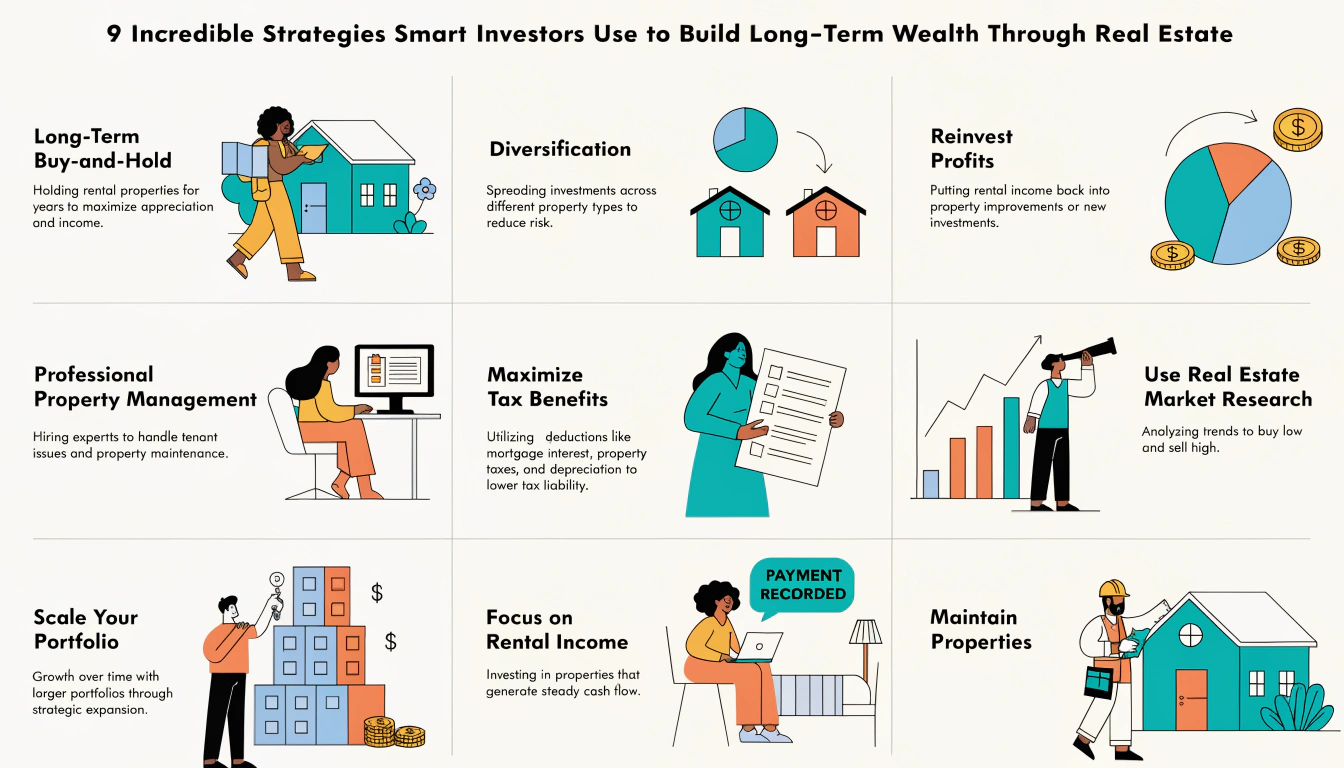
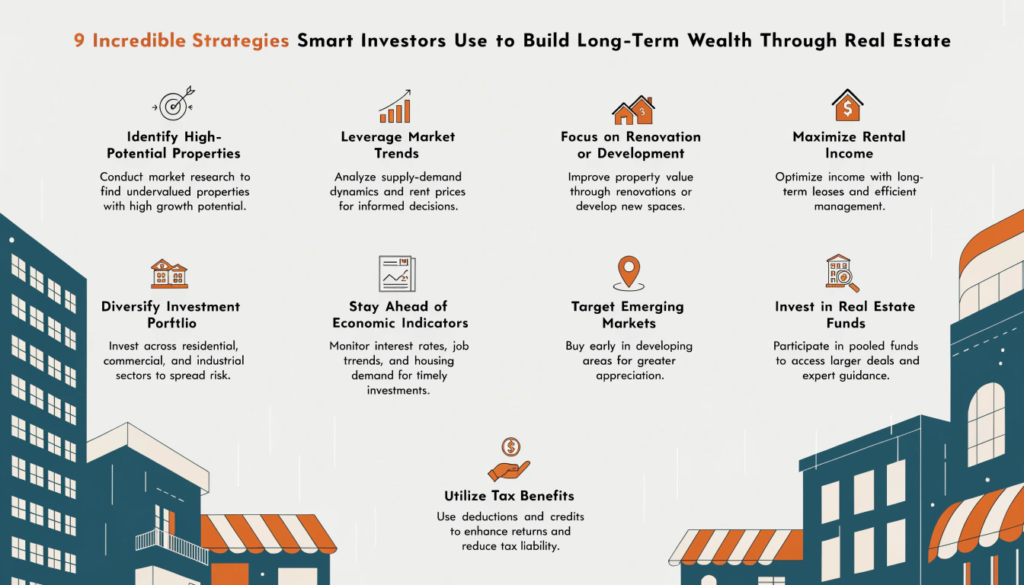
In this guide, we will explore 9 incredible strategies smart investors use to build long-term wealth through real estate, along with practical insights that can help you make smarter investment decisions.
Understanding the Power of Real Estate Investment
Real estate investment is one of the most powerful wealth-building tools available. Property ownership allows investors to benefit from both rental income and property appreciation over time. Unlike stocks that can fluctuate quickly, real estate typically grows in value steadily when purchased in the right market.
Smart investors understand that patience is key. Real estate wealth rarely happens overnight, but consistent investments can create massive financial stability over time. When investors hold properties for many years, they benefit from increasing property values, rising rental income, and reduced loan balances.
In addition, real estate provides a hedge against inflation. As living costs increase, property values and rental prices usually rise as well. This makes real estate one of the most reliable long-term investment options.
Choosing the Right Location for Property Investment
Location is one of the most important factors in successful real estate investing. Smart investors focus on areas with strong economic growth, good infrastructure, and increasing population demand.
Properties located near schools, business districts, transportation hubs, and shopping centers usually attract higher demand. These areas also tend to experience faster appreciation in property value over time.
Experienced investors study local market trends before purchasing a property. They analyze factors such as employment rates, new developments, and rental demand. A good location can dramatically increase the long-term profitability of a real estate investment.
Investing in Rental Properties for Passive Income
Rental properties are one of the most popular strategies used by real estate investors. By purchasing properties and renting them to tenants, investors create a steady stream of passive income.
This income can help cover mortgage payments, maintenance costs, and even generate additional monthly profit. Over time, rental income may increase while mortgage balances decrease, improving overall returns.
Many investors build wealth by gradually expanding their rental property portfolio. With multiple properties generating income, investors can achieve financial stability and long-term financial independence.
Leveraging Mortgage Financing to Grow Investments
Smart investors often use leverage to increase their investment potential. Instead of paying the full price for a property, they use mortgage financing to acquire valuable assets.
By putting down a smaller amount of capital, investors can control larger properties and benefit from full property appreciation. This allows them to build a portfolio faster than purchasing properties with cash alone.
Leverage also increases return on investment when property values rise. However, successful investors carefully manage their financing to ensure that rental income covers loan payments and expenses.
Buying Undervalued Properties
Another powerful wealth-building strategy is purchasing undervalued properties. These properties may require repairs, renovations, or improved management.
Smart investors identify opportunities where the property price is lower than the potential market value. After making improvements, they can increase the property’s worth significantly.
This strategy, often known as value-added investing, allows investors to build equity quickly. Many successful real estate investors have grown their portfolios by identifying and transforming undervalued properties.
House Hacking for Beginner Investors
House hacking is a popular strategy for beginner real estate investors. This involves purchasing a multi-unit property, living in one unit, and renting out the others.
The rental income from other tenants can help cover mortgage payments and living expenses. In some cases, investors may even live rent-free while building equity in the property.
This approach allows beginners to enter the real estate market with lower financial risk. Over time, investors can move into another property and repeat the process to grow their investment portfolio.
Long-Term Property Appreciation Strategy
Real estate values generally increase over time, especially in growing markets. Smart investors focus on properties that are likely to appreciate due to economic development and population growth.
Holding properties for the long term allows investors to maximize appreciation gains. Even moderate annual increases in property value can result in substantial wealth over decades.
Investors who adopt a long-term mindset avoid frequent buying and selling. Instead, they focus on holding valuable assets and allowing market growth to increase their wealth.
Diversifying Real Estate Investments
Diversification is a key principle in any successful investment strategy. Smart real estate investors often invest in different types of properties to reduce risk.
This may include residential homes, apartment buildings, commercial spaces, and vacation rentals. Each property type has unique benefits and income opportunities.
By diversifying their portfolio, investors protect themselves from market fluctuations. If one property sector slows down, others may continue generating income.
Using Professional Property Management
Managing multiple properties can become time-consuming. Many investors hire professional property management companies to handle tenant screening, maintenance, and rent collection.
This allows investors to focus on expanding their portfolio instead of dealing with daily management tasks. Professional management also improves tenant satisfaction and property upkeep.
With reliable management, investors can scale their investments more efficiently and maintain consistent income from their properties.
Understanding Market Cycles
Real estate markets move in cycles that include growth, stability, and decline phases. Smart investors study these cycles carefully before making investment decisions.
Buying properties during market downturns can provide excellent opportunities. When the market recovers, property values often rise significantly.
Understanding market timing helps investors avoid overpaying for properties and maximize long-term profits.
Building Strong Financial Planning
Successful investors always plan their finances carefully before purchasing property. They calculate potential rental income, maintenance costs, taxes, and mortgage payments.
Having a clear financial plan reduces risks and ensures that investments remain profitable. Smart investors also maintain cash reserves for unexpected expenses.
Proper financial management plays a crucial role in long-term real estate success.
Renovating to Increase Property Value
Renovation can significantly improve the value of a property. Strategic upgrades such as modern kitchens, bathrooms, and energy-efficient features attract better tenants and buyers.
These improvements often increase rental income and resale value. Smart investors focus on renovations that provide the highest return on investment.
Carefully planned upgrades can transform average properties into high-value assets.
Investing in Emerging Markets
Many experienced investors search for emerging real estate markets with strong growth potential. These areas often have lower property prices but high future demand.
Cities experiencing population growth, infrastructure development, and new businesses offer attractive investment opportunities.
Early investments in such markets can lead to significant long-term profits.
Maintaining Properties Properly
Property maintenance plays an important role in protecting investment value. Well-maintained properties attract better tenants and reduce repair costs over time.
Regular inspections, timely repairs, and quality upgrades ensure that the property remains competitive in the market.
Smart investors understand that good maintenance preserves both property value and rental income.
Building a Reliable Investment Team
Real estate investing often requires a team of professionals including real estate agents, attorneys, contractors, and financial advisors.
Having a reliable team allows investors to make better decisions and avoid costly mistakes.
Experienced professionals can also help investors identify profitable opportunities and manage complex transactions.
Reinvesting Rental Profits
One of the most effective wealth-building strategies is reinvesting rental profits into additional properties.
Instead of spending all rental income, smart investors use these funds to grow their portfolio.
Over time, this compounding strategy can lead to significant financial growth and passive income.
Using Tax Advantages in Real Estate
Real estate offers several tax benefits that can improve investment returns. These include depreciation deductions, mortgage interest deductions, and property tax deductions.
Smart investors work with tax professionals to maximize these benefits legally.
Tax advantages can significantly increase the overall profitability of real estate investments.
Monitoring Investment Performance
Successful investors regularly evaluate the performance of their properties. They analyze rental income, expenses, and market trends.
This helps them identify underperforming assets and make necessary adjustments.
Regular monitoring ensures that investments remain profitable and aligned with financial goals.
Scaling Real Estate Portfolio Gradually
Building wealth through real estate often involves gradual portfolio expansion. Smart investors start with one property and expand strategically over time.
This approach allows them to learn from experience and reduce financial risks.
With careful planning and patience, investors can eventually build a large and profitable property portfolio.
Staying Patient and Consistent
Real estate investing is a long-term journey that requires patience and discipline. Market fluctuations may occur, but long-term investors usually benefit from steady growth.
Consistency in buying quality properties, managing them well, and reinvesting profits leads to financial success.
Many successful real estate investors built their wealth over decades through disciplined strategies.
Conclusion
Real estate remains one of the most powerful methods for building long-term wealth. By following smart investment strategies such as choosing the right location, generating rental income, leveraging financing, and reinvesting profits, investors can create sustainable financial growth.
Successful real estate investing requires patience, research, and strategic decision-making. Investors who stay committed to these principles often achieve financial independence and long-term security through property ownership.
FAQs
1. Is real estate a good investment for long-term wealth?
Yes, real estate offers rental income, appreciation, and tax benefits, making it one of the best long-term investment options.
2. How much money do I need to start investing in real estate?
The amount varies depending on location and property type, but many investors start with a small down payment using mortgage financing.
3. What is the safest real estate investment strategy?
Investing in rental properties in strong locations is generally considered one of the safest strategies.
4. Can beginners succeed in real estate investing?
Yes, beginners can succeed by learning the market, starting small, and using strategies like house hacking or rental investments.
5. How long does it take to build wealth through real estate?
Most investors build significant wealth over 10–20 years through consistent property investments and appreciation.
Leave a Reply